

By Jan Schüler
Updated December 31, 2025 08:11 pm
Over the past year, I’ve spent a lot of time thinking about the structural shifts in the alcohol beverage market — and what they mean for our work importing German wines.
NOLO and RTDs are real, durable trends. But they are reshaping beer and spirits, not wine.
Wine is fundamentally different. Alcohol is not a delivery mechanism in wine — it is structural. Remove it, and you don’t create an equivalent. You collapse the thing itself.
Wine without alcohol isn’t wine
Ethanol carries aroma, texture, balance, and length. Strip it out and you don’t get “zero wine.” You get grape tea with acidity.
This is why alcohol-free works for beer and spirits, categories built on flavor engineering, but fails organoleptically for wine.
Think about removing alcohol from Cabernet Sauvignon, Riesling, Nebbiolo, Pinot Noir, or Blaufränkisch. Their identity disappears. The same is true for terroir-driven, lesser-known varieties that wine drinkers increasingly explore — Silvaner, Grüner Veltliner, Furmint, Xinomavro, Mencía. None of these drink well without alcohol. There is no workaround.
“Drink less, drink better” still applies to wine
Wine volumes are under pressure, but this is an occasion shift, not a substitution shift.
Consumers aren’t replacing wine with zero-wine. They’re drinking wine fewer days per week, choosing better bottles when they do, and anchoring wine to food, culture, and context.
That dynamic is fundamentally different from late-night consumption, mixers, and impulse-driven occasions.
Wine does not compete on the same axes as RTDs
RTDs win on convenience, novelty, and daypart expansion.
Wine wins on food pairing, provenance, craft, and cultural literacy.
These are not interchangeable demand spaces.
Gen Z isn’t anti-wine — they’re anti-bullsh*t
Younger consumers reject industrial brands, confusing hierarchies, and empty prestige signaling. They respond to transparency, farming stories, authentic regions, and wines that feel intentional.
Lower-alcohol wine fits that mindset. Alcohol-free wine does not.
Why this matters for German wine — and for Weinhaus Traubengold
If wine’s future is less often but more deliberately, Germany is uniquely well positioned.
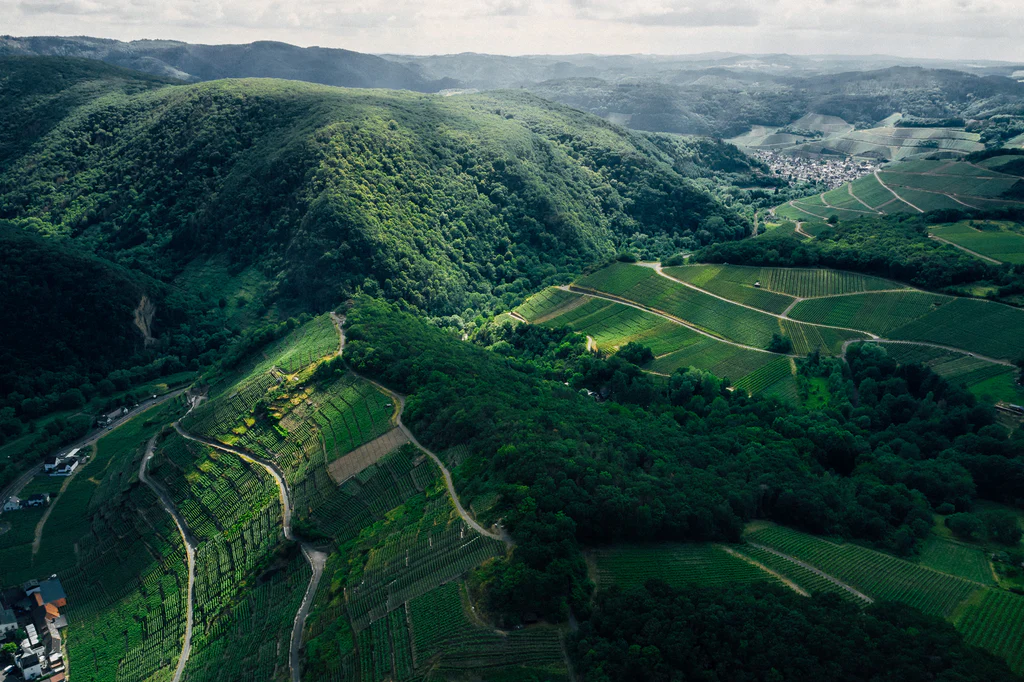
German wine has always prioritized precision over power, site expression over make-up, and food compatibility over spectacle. Long before moderation became a talking point, Germany was producing wines at 10–12% alcohol that rely on acidity, structure, and balance — not manipulation — to carry flavor.
At Weinhaus Traubengold, that’s the lens we apply when building our portfolio. We work with growers whose wines are complete as they are. They don’t need to be stripped, engineered, or explained away.
If consumers are drinking wine fewer days per week but choosing more carefully, terroir-driven, food-anchored wines don’t lose relevance — they gain it.
Bottom line
Spirits face a genuine structural reckoning. RTDs and NOLO are real growth vectors — for categories where alcohol is optional.
Wine is different. Alcohol is essential.
There is no credible zero-alcohol future for Cabernet, Riesling, Nebbiolo, or Blaufränkisch. Pretending otherwise misunderstands what wine actually is.
Wine won’t disappear. It will be consumed less often, more deliberately — and it will remain alcohol-intact.